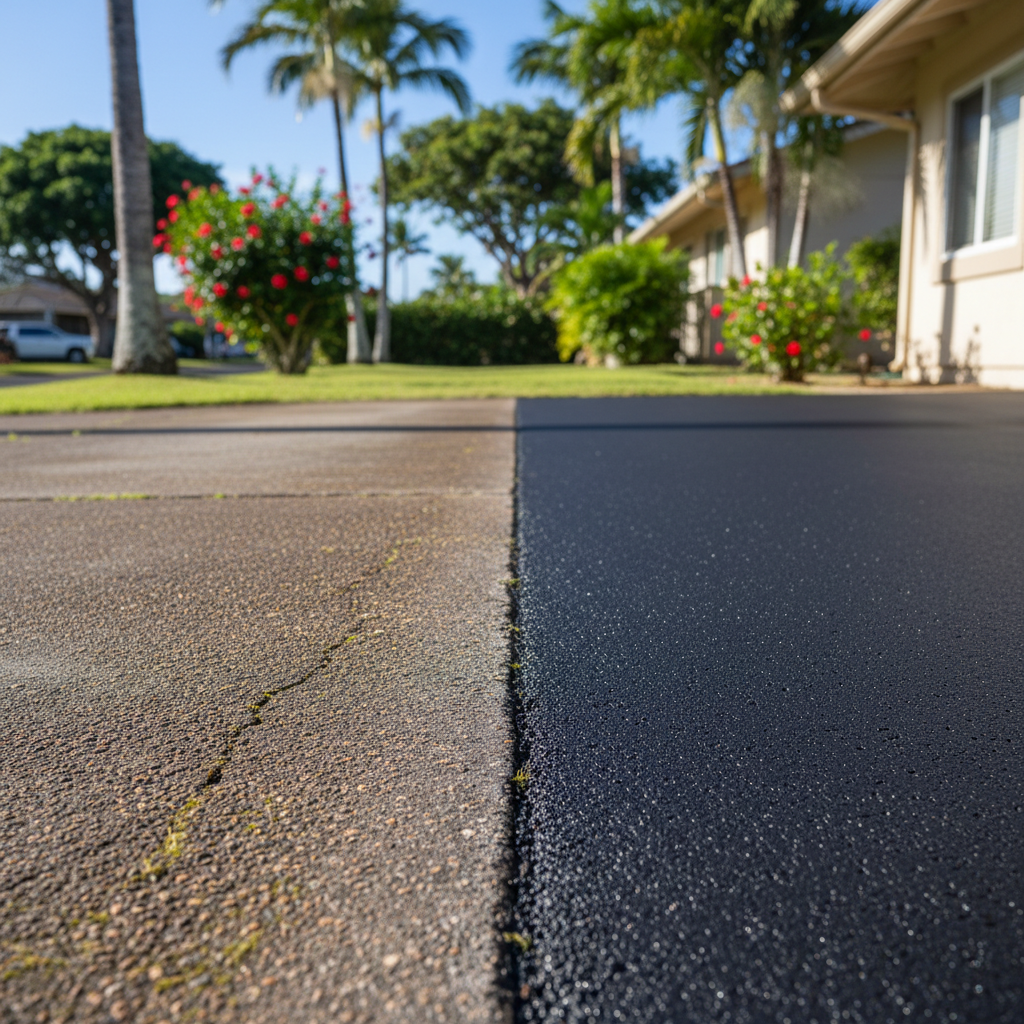
So, you're looking at your driveway, and let's be honest, it's seen better days. Maybe you've got cracks, potholes, or it just looks plain tired. You know something needs to happen, but what's the smartest move? For homeowners right here in Honolulu, the big decision often boils down to two main choices: a full tear-out and brand-new asphalt paving, or an asphalt overlay, which some folks call resurfacing. Let's break down what each one means for you.
What's an Asphalt Overlay (Resurfacing)?
An asphalt overlay is pretty straightforward: we put a new layer of asphalt right over your existing, damaged pavement. Think of it like a fresh coat of paint, but for your driveway – a much thicker, more durable coat, of course. Before we even get to that, we'll fix any major cracks or potholes in the old surface, double-check that the drainage is still doing its job, and then apply a bonding agent. After all that prep, we lay down a fresh layer of hot mix asphalt, usually about 1.5 to 2 inches thick, right on top.
Pros of an Overlay:
- Easier on the Wallet: This is often the biggest draw. Since we're not tearing out and hauling away all the old material, it generally costs less than a full replacement. You save on labor and disposal, which is always nice.
- Faster Job: An overlay usually takes less time to finish. That means less disruption for you and your family, which, let's face it, is a huge plus.
- Good for Medium Damage: If your driveway has some surface cracks but the base underneath is still solid, an overlay can give it years of new life and a sharp look.
Cons of an Overlay:
- Shorter Lifespan: While it'll look fantastic, an overlay won't last as long as a completely new driveway. You're covering up problems, not making them disappear entirely. Any big issues with the base layer will eventually show through, unfortunately.
- Not for Really Bad Driveways: If your driveway is covered in "alligator cracking," has huge potholes, or serious drainage problems, an overlay is just a temporary fix. It won't solve those deep-seated issues.
- Changes in Height: Adding a new layer of asphalt means your driveway will be a bit higher. We always check this carefully, especially around garage doors, sidewalks, and landscaping, just to make sure it won't cause any headaches.
What's a Full Tear-Out and New Pavement?
This is exactly what it sounds like. We completely remove your old asphalt driveway, haul it away, and then start fresh. We'll inspect and prepare the sub-base (that's the dirt underneath), lay down and compact a new aggregate base layer, and then pave with fresh hot mix asphalt. This is the most thorough solution you can get.
Pros of New Pavement:
- Super Durable, Long-Lasting: A new driveway, built from the ground up, will last the absolute longest. You're getting a fresh start with a rock-solid foundation.
- Fixes Everything: If you're dealing with serious drainage problems, a failing sub-base, or extensive damage, this is the only real way to truly fix it.
- Make it Your Own: You can easily change the shape, size, or even the slope of your driveway during this process. Want a wider turn-around? Now's the time.
- Looks the Best: Nothing beats the look of brand-new, smooth asphalt. It just pops.
Cons of New Pavement:
- Costs More: This is the most expensive choice because of the extra labor for demolition, getting rid of old materials, and the larger amount of new stuff we need.
- Takes Longer: Tearing out and rebuilding takes more time, which means more disruption to your daily routine.
- More Messy: There's more heavy equipment involved, more noise, and more debris during the process. It's a bigger job, after all.
Which is Right for Your Honolulu Home?
Here in Honolulu, we see a lot of driveways that have really taken a beating from the sun, heavy rains, and even salt air, especially those closer to the coast. The soil conditions can vary quite a bit too; some areas, like those in Manoa, have more clay, which can affect drainage if it's not handled right. So, what's my recommendation?
If your driveway has only minor surface cracks, fading, or small, isolated potholes, and the base feels solid when you walk or drive on it, an asphalt overlay is probably your best bet. It's a great way to refresh its look and extend its life without breaking the bank. It's especially good if you're planning to sell your home in the next 5-10 years and want to boost curb appeal without a massive investment.
However, if your driveway looks like a patchwork quilt, has extensive deep cracks (often called 'alligator cracking'), significant dips or humps, or standing water after a rainstorm, then you really need a full tear-out and new pavement. Trying to overlay a severely damaged driveway is just throwing good money after bad. Those underlying problems will resurface, often quickly, and you'll end up paying twice. And who wants that?
Ultimately, the best way to know for sure is to have a professional take a look. We can assess the condition of your existing driveway, check the drainage, and give you an honest recommendation. At Spectrum Asphalt Solutions, we're always happy to come out, inspect your property, and walk you through your options so you can make an informed decision for your home.