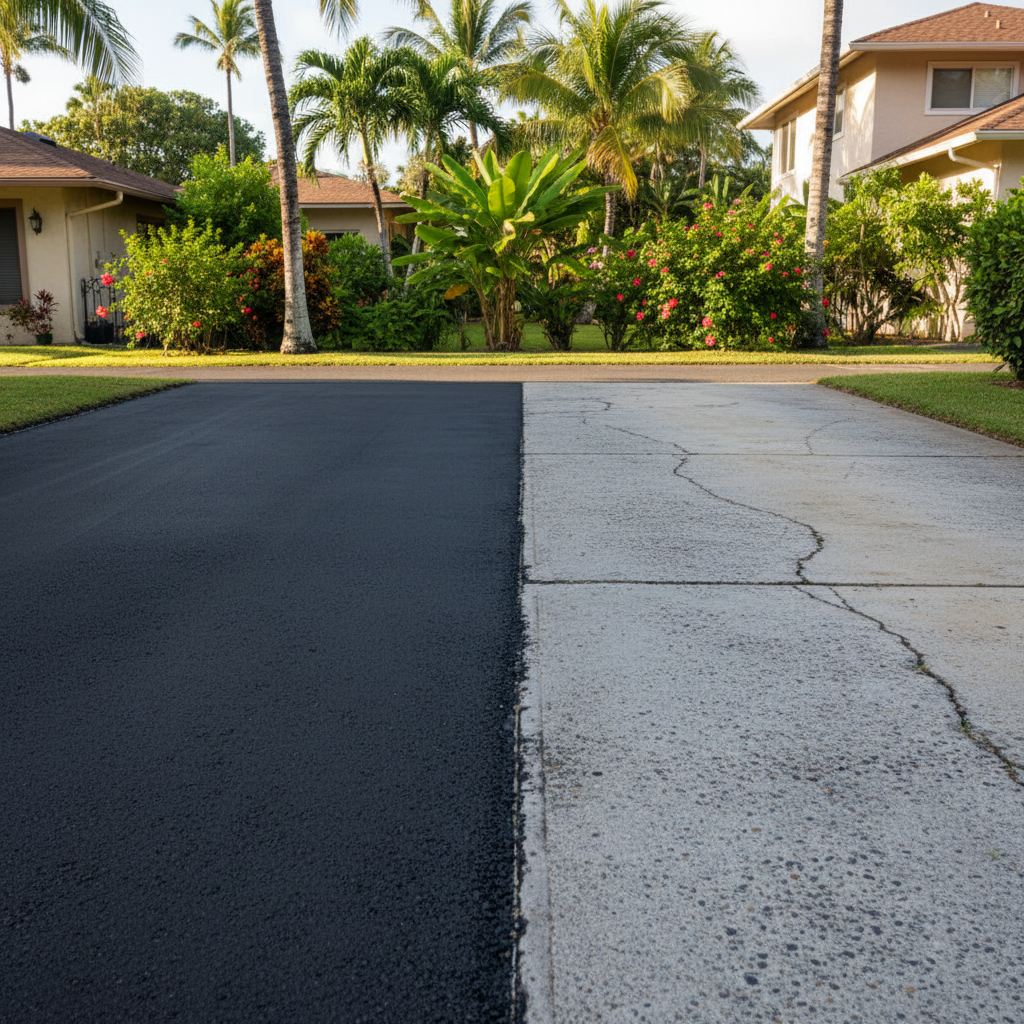
Got a pothole? Or maybe a spiderweb of cracks is spreading across your driveway? It's definitely an eyesore, sure, but more importantly, it's a trip hazard. And let's be real, with our Honolulu sun and rain, it's only going to get worse. When you're looking to fix these kinds of problems, you generally have two main options for asphalt patching: infrared patching or the more traditional saw-cut and remove method. People ask me all the time which one's better, so let's just talk about it for a bit.
Infrared Asphalt Patching: The Quick Fix
First up, infrared patching. This method uses an infrared heater to warm up the existing asphalt around the damaged area. We're talking about getting it really hot, softening it so it becomes pliable again. Once it's soft, we rake out the loose bits, add some new asphalt mix, and then compact it all together. Think of it like reheating leftovers and mixing in some fresh ingredients — a pretty good analogy, if I do say so myself.
Pros of Infrared Patching:
- Faster Process: It's usually quicker to get done. Less cutting, less hauling away old material, you know?
- Seamless Look: Because you're blending the old and new asphalt, you often end up with a smoother transition. No harsh lines around the patch.
- Less Waste: You're actually reusing a lot of the existing material, so there's less stuff heading to the landfill. That's a definite plus for the environment.
- Cost-Effective for Small, Shallow Repairs: For minor surface issues, it can be the more economical choice.
Cons of Infrared Patching:
- Depth Limitations: This is a big one, really. Infrared only works well for surface-level damage. If your problem goes deep, if the base layer underneath is shot, infrared just won't fix it. You'd basically be putting a band-aid on a broken bone.
- Quality Depends on Existing Asphalt: If the asphalt around the patch is already old, oxidized, and brittle, heating it up might not actually make it good again. You're trying to rejuvenate something that's already past its prime.
- Durability Can Be Questionable: Because it's often not a full-depth repair, the patch might not last as long, especially with our heavy rains and the constant expansion and contraction from the sun.
Saw-Cut and Remove: The Robust Repair
Now, let's talk about the traditional saw-cut method. This is what Spectrum Asphalt Solutions generally recommends for most serious repairs, by the way. With this approach, we use a saw to cut out a clean, rectangular or square section right around the damaged area. We remove all the old, bad asphalt, dig down to make sure the base is solid, and then we replace it with fresh, hot asphalt mix. It's a complete replacement of that entire bad section.
Pros of Saw-Cut and Remove:
- Superior Durability: You're getting a full-depth repair here. We're addressing the problem from the ground up, not just on the surface. This means the patch is much stronger and will last a lot longer.
- Addresses Base Issues: If the problem started because of a weak base (which is super common here in places like Manoa where we have a lot of clay soil and moisture), this method lets us fix that base before laying new asphalt.
- Higher Quality Finish (Long Term): While you'll see the cut lines initially, a properly installed saw-cut patch, especially when sealed, will hold up better over time and integrate well with the surrounding pavement.
- Reliable for Any Damage Type: Whether it's a shallow crack or a deep pothole that's been there for years, this method handles it all.
Cons of Saw-Cut and Remove:
- More Labor Intensive: It simply takes more time and effort to cut, remove, and haul away the old material.
- More Material Waste: You're removing and disposing of more old asphalt, naturally.
- Higher Upfront Cost: Generally, because it's a more thorough repair, it's going to cost a bit more initially.
My Recommendation for Honolulu Homeowners
Look, I'm not going to beat around the bush. For most homeowners in Honolulu, especially considering our climate and the typical issues I see, I almost always recommend the saw-cut and remove method for asphalt patching. Why? Well, our weather here is tough on asphalt. We get intense sun, heavy downpours, and that constant cycle of heating and cooling. These conditions mean that asphalt damage often goes deeper than just the surface. If you're just heating up and blending old, tired asphalt with new stuff, you're likely going to see that patch fail sooner rather than later. You want a repair that's going to stand up to the elements and give you peace of mind for years, not just months.
Infrared patching has its place, mostly for very minor, surface-level issues or for blending seams in larger projects. But for a homeowner dealing with a legitimate pothole or significant cracking, you want a robust, full-depth repair. You want to fix it right the first time. It might cost a little more upfront, but you'll save money and headaches in the long run because you won't be patching the same spot again next year, will you?
What to Do Next
The best thing you can do is have a professional take a look. We can assess the depth and extent of the damage and tell you honestly what kind of repair will give you the best results for your specific situation. Don't wait until that small crack turns into a crater. Get it fixed right, and your driveway will thank you.